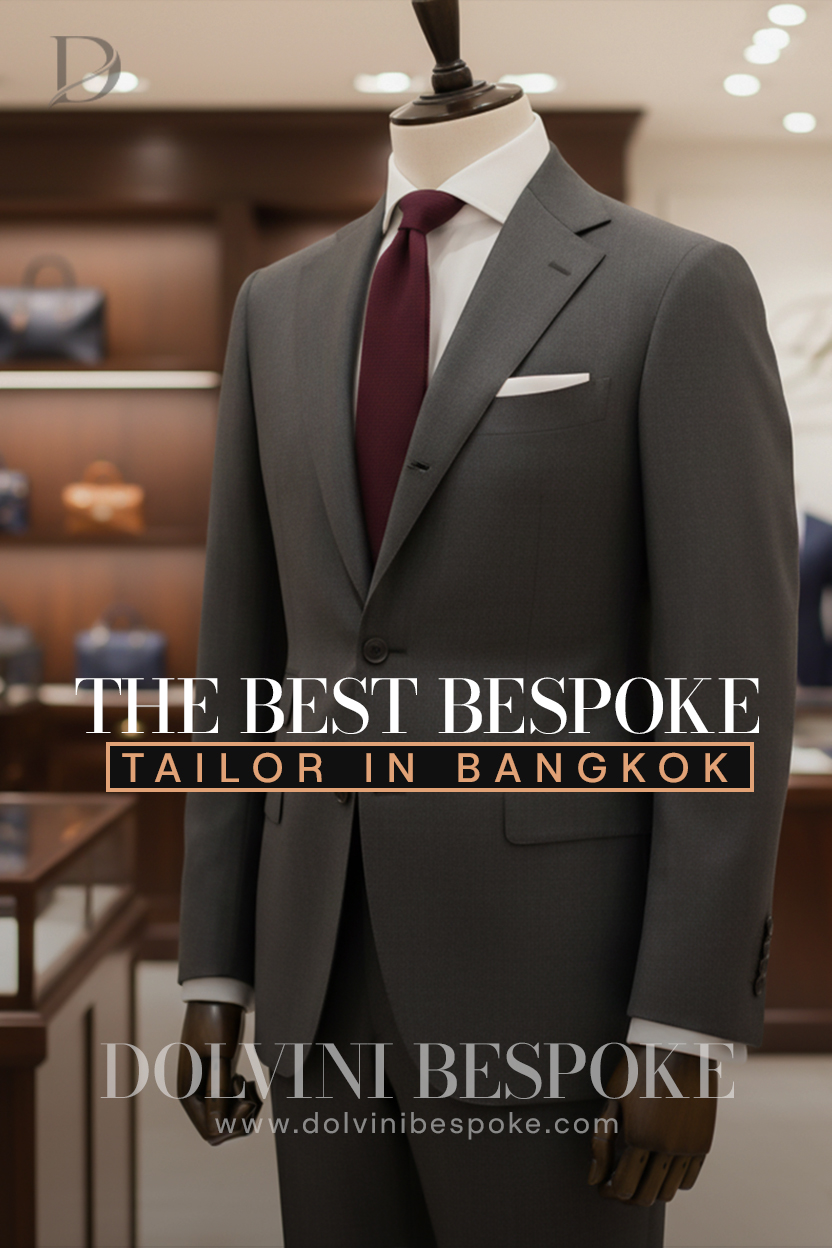
Most people can tell you what a bespoke suit costs. Almost nobody outside the trade can tell you what actually happens between walking in the door and walking out in a finished jacket. Here’s every stage of it, in order, the way it really happens inside our workshop at Platinum Fashion Mall.
Why the process matters more than the price tag
Search “bespoke tailor Bangkok” and you’ll find a hundred shops that use the word “bespoke” the way other stores use the word “premium” — loosely, and mostly for the sound of it. The real definition is narrower and a lot more useful to know before you book anything: a bespoke suit is built from an original pattern, drafted from scratch for one body, and constructed largely by hand. Made-to-measure, by contrast, starts from an existing block pattern and adjusts it. Both can produce a good suit. Only one of them can produce a suit that still fits the way you stand, not just the way you measure.
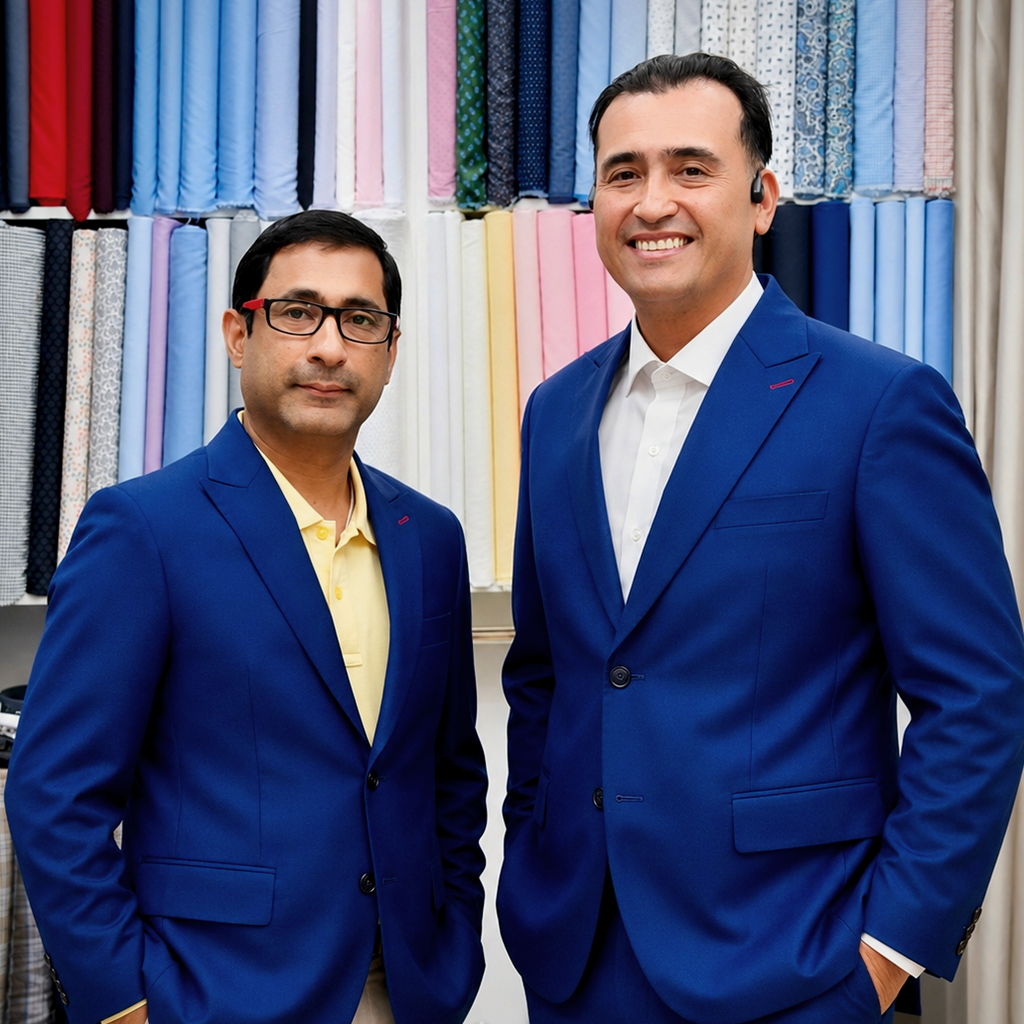
At Dolvini Bespoke, that difference plays out over four stages: consultation, measurement and fitting, craftsmanship, and the final wearing. None of them are optional, and skipping any one of them is exactly how a “bespoke” suit ends up fitting like an expensive off-the-rack one. Below is what each stage actually looks like, using our own workshop and our own clients — no stock photography, no stand-ins.
Quick definition: Bespoke = original pattern, drafted for you, largely hand-built. Made-to-measure = an existing pattern, adjusted to your measurements. Off-the-rack = a fixed size, unadjusted. Price and quality can vary within each category, but the construction method is what separates them.
Step 1 — The Consultation
Stage 1 of 4
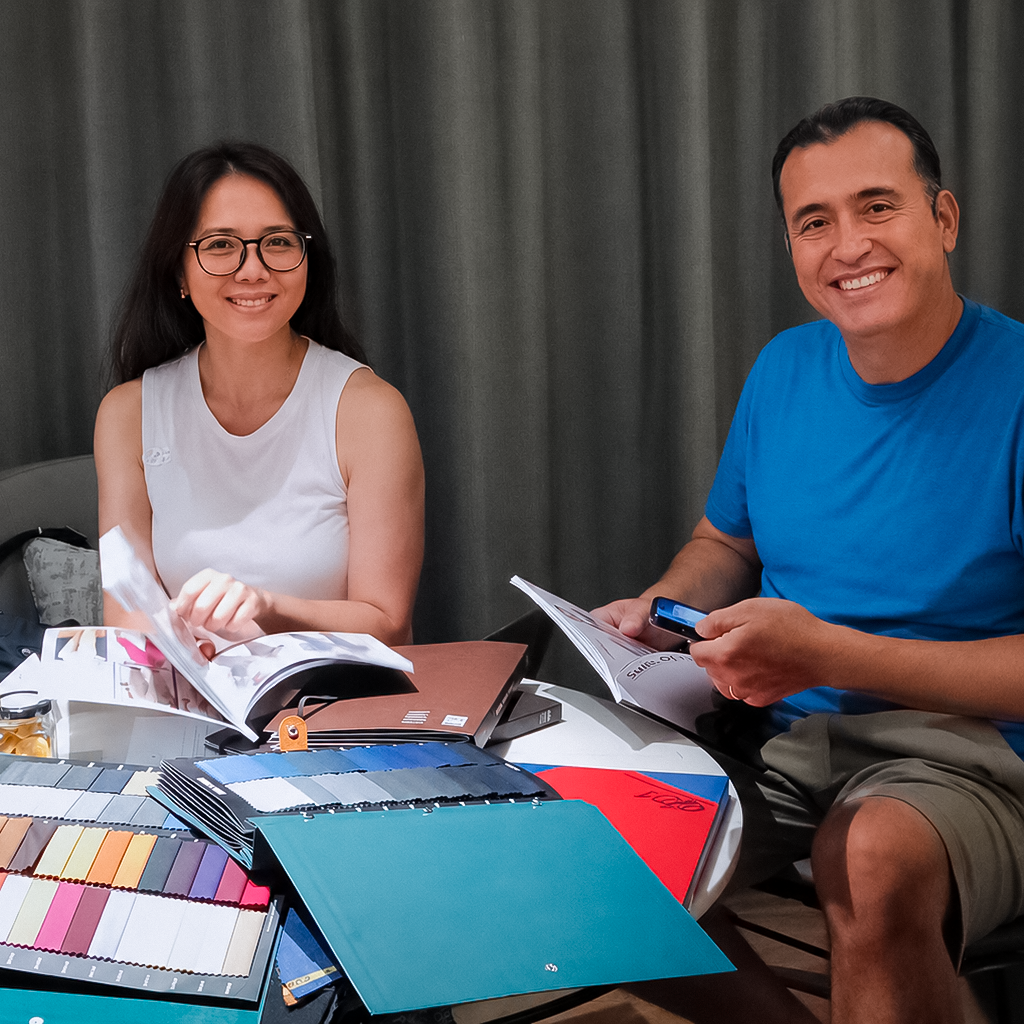
A bespoke suit starts with questions, not a tape measure. What’s it for — a wedding, a work wardrobe, travel, a single big event? Where will you be wearing it — Bangkok’s heat, a colder climate abroad, both? Do you sit at a desk all day or spend most of your time on your feet? Every answer changes a decision somewhere in the suit: cloth weight, canvas construction, lining, even how much room to leave through the shoulder.
This is also where the visible style choices get made — notch, peak or shawl lapel, single or double-breasted, two buttons or three, working cuffs or not, and which of the Italian or English cloths on the table actually suits the occasion and the climate. None of it is rushed. A consultation that takes fifteen minutes usually produces a suit that looks like it took fifteen minutes.
Step 2 — Measurement and the First Fitting
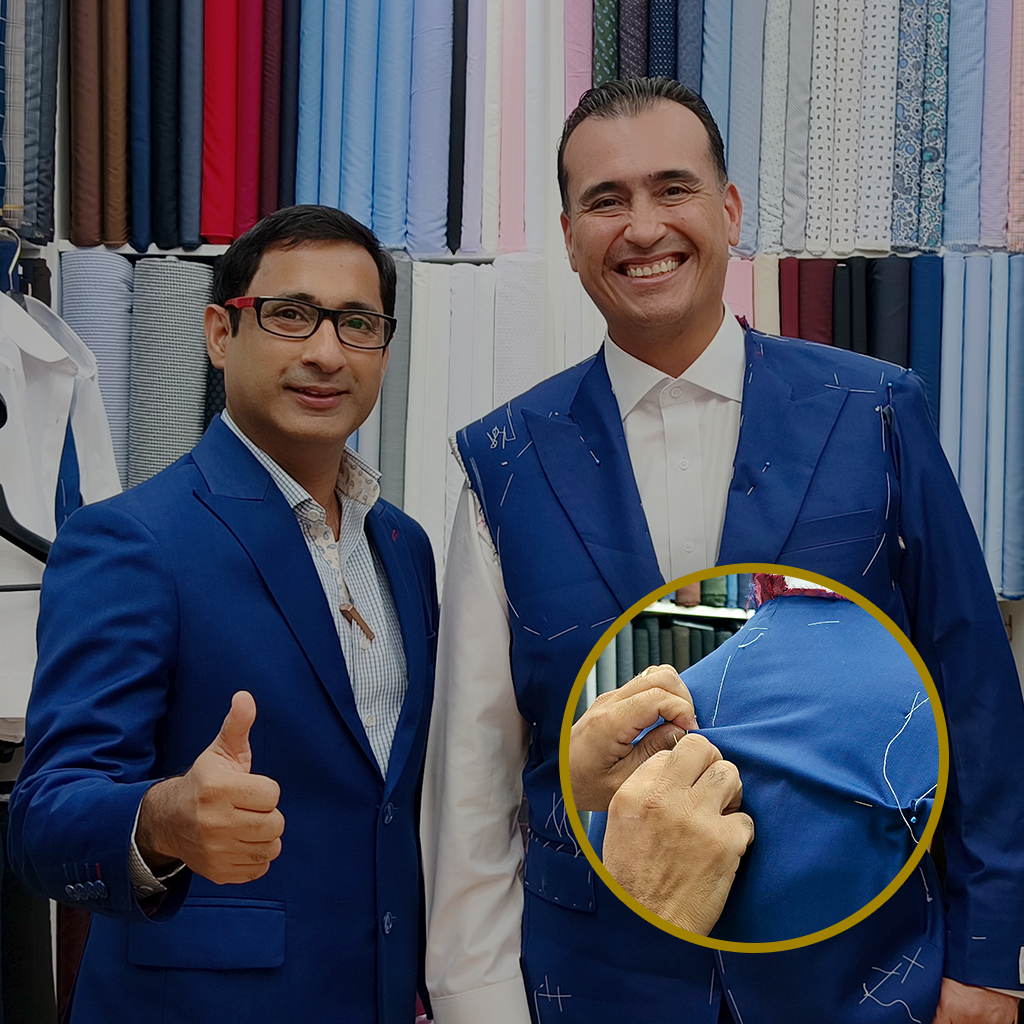
Stage 2 of 4
Measurement in a bespoke house is not thirty seconds with a tape measure. It’s a full set of readings — chest, waist, shoulder slope, arm length, posture, even how square or forward your shoulders sit — because two men with an identical 40-inch chest can need completely different jackets. One might stand very upright; the other might carry weight slightly forward. A house pattern can’t tell the difference. A bespoke pattern is drafted around it.
Once the pattern is cut and the pieces are loosely assembled, the first fitting happens in what’s usually called a baste fitting — the jacket is pinned together rather than sewn, specifically so it can be taken apart and corrected. This is the stage where a shoulder gets nudged, a sleeve gets re-pitched, or a chest gets opened up slightly, all while you’re standing in front of a mirror rather than guessing at home after the fact. It typically takes two to three fittings to get right — sometimes more, and at Dolvini Bespoke, additional fittings beyond that are free until the fit is actually correct.
Step 3 — Inside the Workshop: Craftsmanship
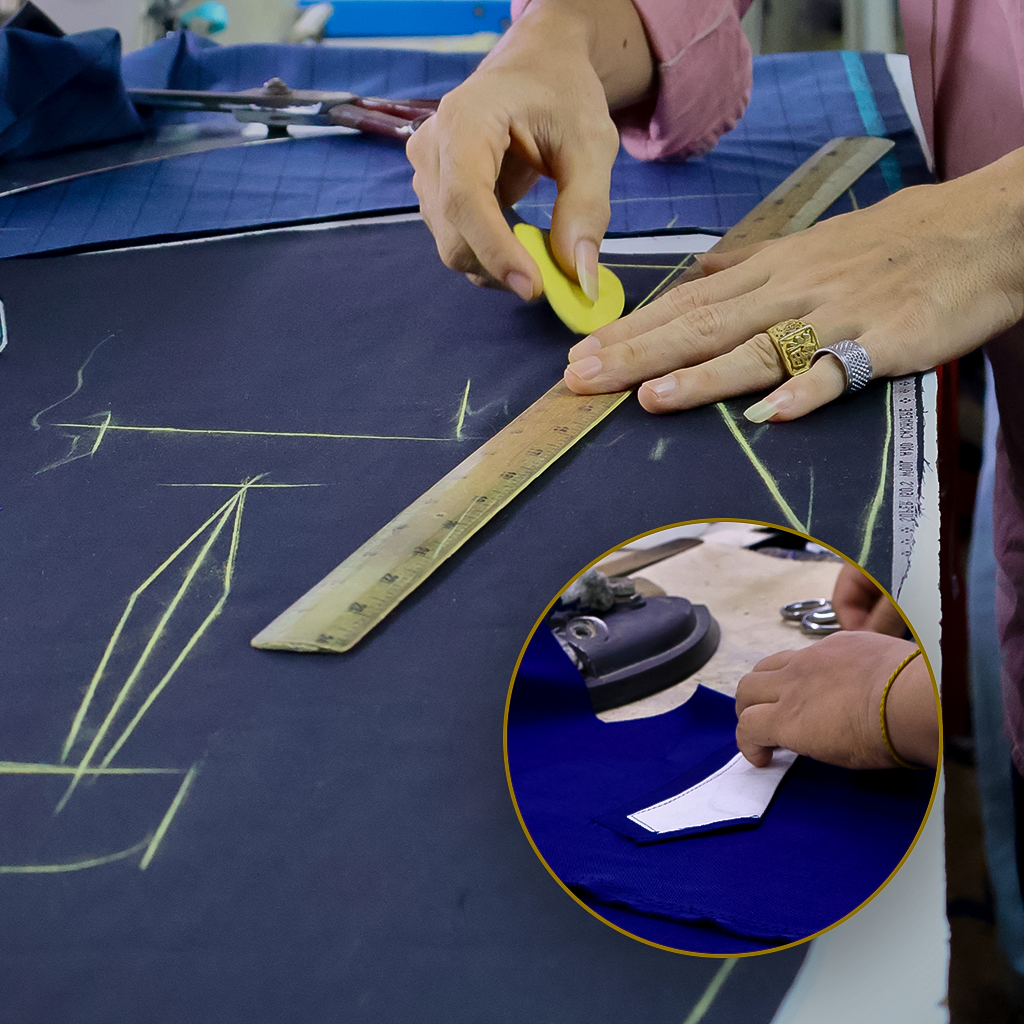
Stage 3 of 4
This is the part of the process most people never see, and it’s where almost all of the actual quality difference lives. A few of the details that separate a genuinely hand-built suit from a machine-assembled one:
Pattern drafting and hand-cutting
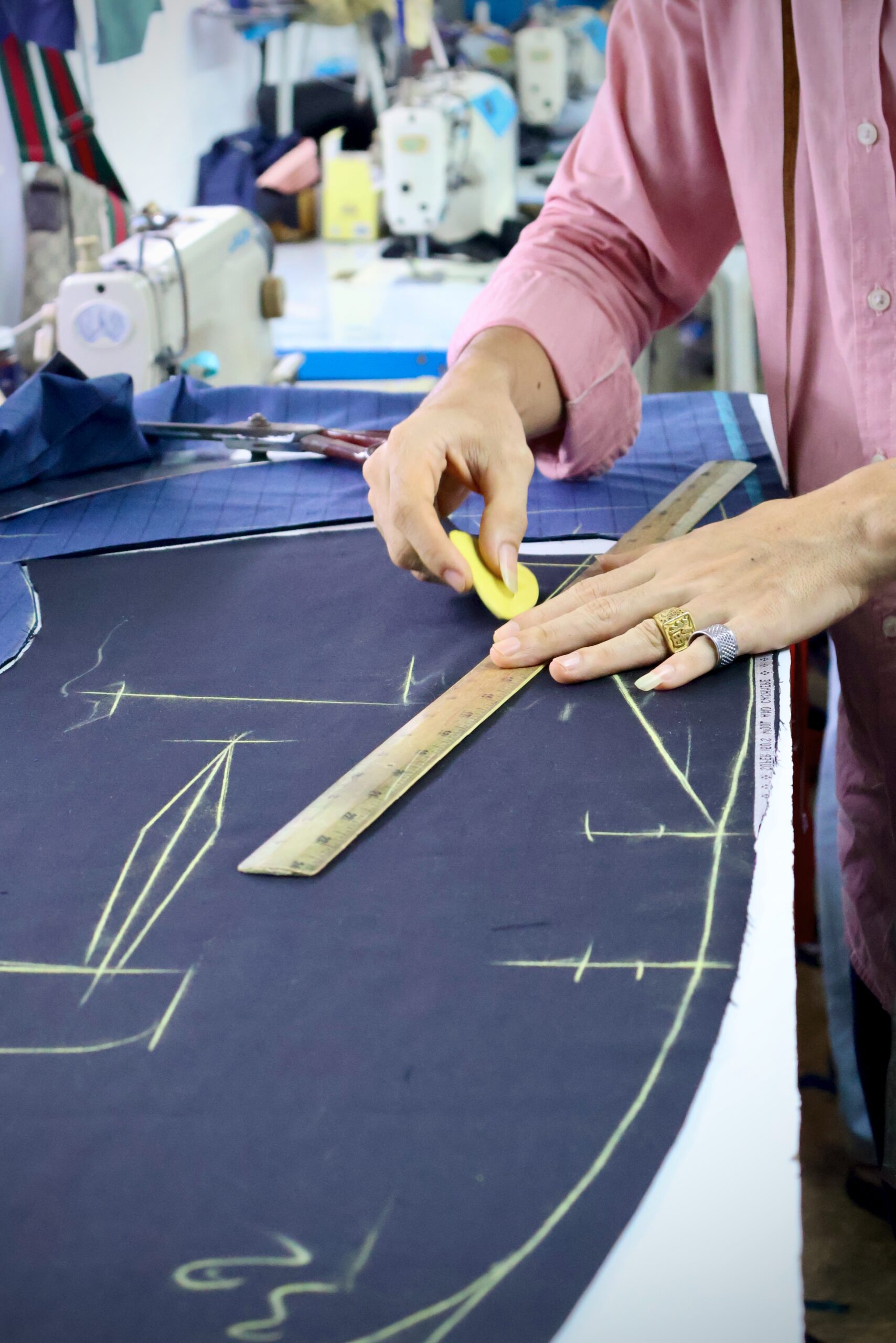
Once measurements and style are confirmed, a pattern is drafted specifically for that body — not pulled off a shelf. The pieces are chalk-marked directly onto the chosen cloth and cut by hand, one panel at a time, checking grain and pattern-matching as they go.
Canvassing and the floating chest
Underneath the outer cloth of a proper jacket sits a canvas interlining, usually a wool-and-horsehair blend, that gives the chest its shape. Cheaper construction glues this layer flat against the fabric — fast, but stiff, and it eventually bubbles or separates. A floated canvas is instead loosely hand-stitched (pad-stitched) so it moves independently of the outer cloth. It takes longer to build and is the single biggest reason a hand-canvassed jacket still holds its shape after ten years, while a fused one starts looking tired after two.
Shoulder construction and sleeve pitch
More fit complaints trace back to the shoulder than to any other part of a jacket. We build it soft and natural rather than heavily padded, so it follows your actual shoulder line. Sleeve pitch — the angle the sleeve is set into the armhole — matters just as much: get it wrong and the sleeve pulls or wrinkles every time you reach forward or drive; get it right and the jacket stays quiet no matter what your arms are doing.
Hand stitching and finishing
Buttonholes, the lapel roll, and the edge of the collar are finished by hand rather than by machine. It’s slower — hand stitching a single jacket takes real hours, not minutes — but it leaves a slight, deliberate texture along the edge that a machine simply cannot reproduce, and it’s part of why a hand-finished garment reads as bespoke the moment someone who knows tailoring picks it up.
Step 4 — The Final Wearing
Stage 4 of 4
The finished suit goes on one more time before it’s ever considered done. Buttoned, walked in, sat down in, arms raised — because a suit that looks perfect standing still in a mirror can still fail the moment you move. This is the fitting that catches the last half-centimetre nobody would have noticed until the third time they wore it out of the house.
Only once that final check clears does the suit actually belong to you. It’s a small, quiet moment compared to the hours of cutting and stitching that came before it, but it’s the one that decides whether everything before it was worth doing properly.
How long does the whole process actually take?
It depends on the package and how much time you have in Bangkok. A standard bespoke build with proper fittings takes about three to four weeks. Travelers on a tighter schedule can move through the same four stages on an accelerated timeline — the process doesn’t change, only how tightly the steps are scheduled.
| Stage | Standard Build | Express Build |
|---|---|---|
| Consultation | Day 1 | Day 1 |
| Measurement & first fitting | Day 1–3 | Day 1 |
| Craftsmanship | 2–3 weeks | 12–48 hours |
| Final wearing | Week 3–4 | Day 2 |
Why Bangkok — and why Platinum Fashion Mall — is the right place to have this done
Bangkok, and specifically Pratunam, has one of the highest concentrations of experienced tailors, cloth suppliers and finishing workshops anywhere in the world, which is exactly why express bespoke tailoring exists here at all — the infrastructure supports it in a way most cities can’t. Dolvini Bespoke sits inside Platinum Fashion Mall (Zone 2, 4th Floor, Camden 2, Room 1046), a two-minute walk from Pratunam Market and a short ride from Central World, which means the entire four-stage process — consultation, fitting, workshop and final wearing — happens under one roof instead of being spread across three different appointments in three different parts of the city.
Frequently asked questions about the bespoke process
Is bespoke tailoring really different from made-to-measure?
Yes. Made-to-measure adjusts an existing house pattern to your size. Bespoke drafts an entirely new pattern for your body from the first appointment, which is why the fit and the price both differ from off-the-rack.
How many fittings should I expect?
Two to three is standard. If the fit still isn’t right after that, further fittings are provided free of charge until it is.
What is a “floating canvas” and why does it matter?
It’s the hand-stitched interlining that shapes the chest without being glued flat to the outer cloth, letting the jacket move naturally with your body and hold its shape for years instead of months.
Can the whole process be done in a few days if I’m traveling?
Yes, on select packages with a 12–48 hour build. The four stages stay the same; only the workshop timeline is compressed.
Do I need to be in Bangkok for every fitting?
The consultation and fittings need to happen in person, since fit corrections are made directly on your body. Reorders after your first suit can sometimes be handled remotely using your saved measurements.
What fabrics are used during the craftsmanship stage?
Premium Italian and English wool, including Super 100s through Super 150s weights, alongside cashmere, mohair, linen, cotton and silk blends, chosen during the consultation to suit the occasion and climate.
How do I book a consultation?
Message Dolvini Bespoke directly on WhatsApp with your preferred dates, or walk in at Platinum Fashion Mall, Zone 2, 4th Floor, Camden 2, Room 1046.
Start Your Own Bespoke Suit
Now you know what actually happens. Let’s start Step One.
Book a consultation on WhatsApp with your travel dates, or visit us at Platinum Fashion Mall, Zone 2, 4th Floor, Camden 2, Room 1046.